

Nail Disorders
What Are Nail Disorders?
Nail disorders cover a wide range of conditions affecting the fingernails and toenails, from infections and inflammatory skin disease through to changes in colour, thickness and shape.
Nails are a useful indicator of general health. Changes to the nail plate, nail bed or surrounding skin can reflect a local problem such as infection or trauma, or point to an underlying skin condition like psoriasis or eczema. In some cases nail changes are the first visible sign of a broader issue.
Most nail conditions are treatable, particularly when the underlying cause is identified accurately. Many are also mistaken for one another, which is why nail problems commonly persist despite over-the-counter treatment.
Nail Changes & Symptoms
Nail changes vary depending on the underlying cause. Common symptoms include:
- discolouration of the nail plate, including yellow, white, green or brown changes
- lifting of the nail away from the nail bed
- thickening of the nail plate
- small pits or dents across the nail surface
- ridges running along the length or across the width of the nail
- splitting, peeling or crumbling of the nail
- brittleness and breakage
- pain, redness or swelling of the skin around the nail
- pigmented bands running from the base of the nail to the tip
A single symptom can have several possible causes. Thickening and discolouration, for example, occur in both fungal infection and nail psoriasis, and the two are managed very differently.
What Causes Nail Problems?
Nail changes generally fall into a small number of causes.
- Infection: Fungal infection is the most common cause of nail disease. Bacterial and yeast infections also occur, particularly where the skin around the nail has been damaged or is frequently wet.
- Inflammatory skin disease: Psoriasis, eczema and lichen planus can all affect the nail matrix and nail bed, producing pitting, lifting and thickening.
- Trauma and repeated wet work: Injury, aggressive manicures, artificial nail removal, tight footwear and prolonged exposure to water and detergents all weaken the nail and its attachment to the nail bed.
- Ageing: Nail growth slows over time and the nail plate changes in composition, becoming more brittle, thickened and prone to splitting.
- Systemic conditions: Thyroid disease, iron deficiency and other medical conditions can alter nail shape, colour and integrity.
Common Nail Conditions We Treat
Fungal Nail Infection
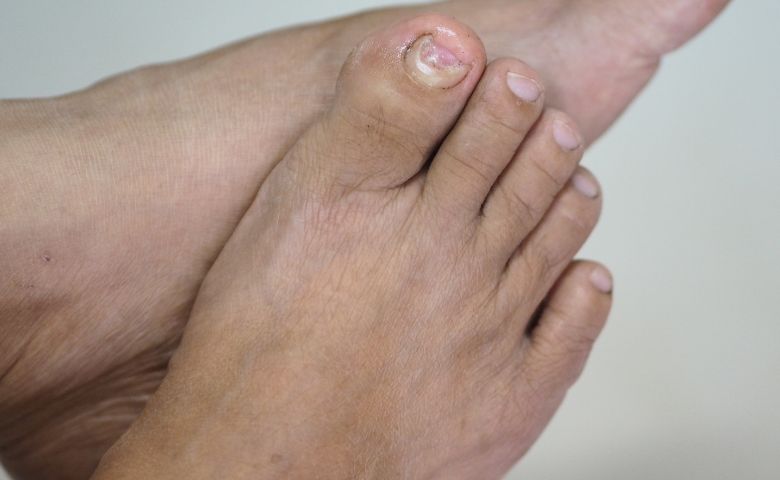
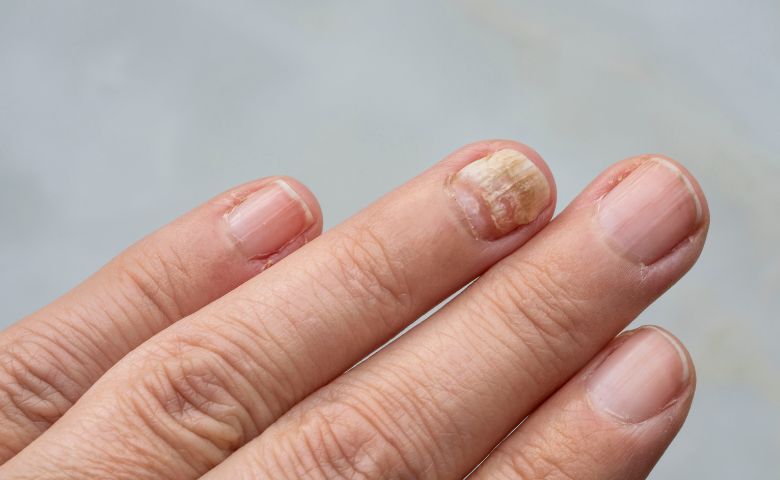
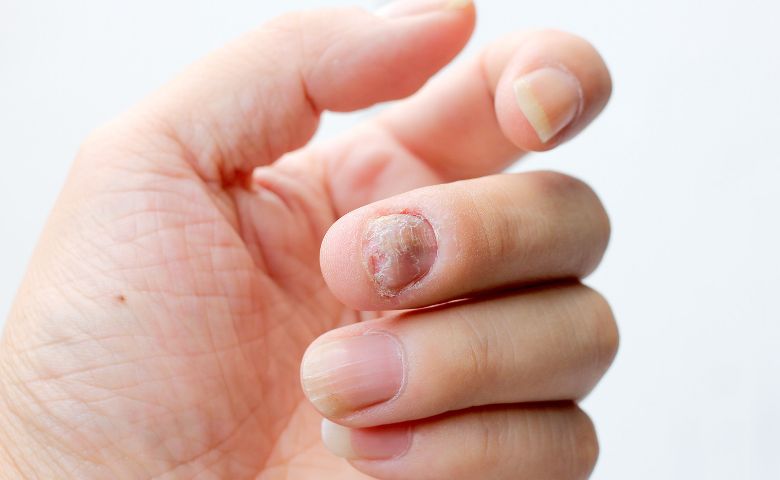
Fungal nail infection, also called onychomycosis, typically causes a thickened, crumbling and discoloured nail plate. It affects toenails more often than fingernails and can spread between nails and between people. Those with diabetes or reduced immunity are at higher risk.
Confirming the diagnosis matters. Nail clippings should be taken from the affected area and sent for fungal culture before treatment begins, because several other conditions produce a similar appearance.
Where infection is confirmed and the nail plate is significantly involved, oral antifungal medication is required. Topical antifungal paints are generally not effective once the infection has established within the nail plate. Treatment courses typically run for several months, as the nail must grow out clear.
Nail Psoriasis
Psoriasis affecting the nails produces a distinctive combination of changes: small pits across the nail surface, lifting of the nail plate, thickening, crumbling and yellow or reddish discolouration beneath the nail.
Nail psoriasis is frequently mistaken for fungal infection, and treating it as such will not improve it. Nail involvement is also associated with psoriatic arthritis, so joint symptoms are worth raising during assessment.
Treatment targets the underlying immune-mediated inflammation rather than the nail itself. Because nails grow slowly, improvement takes time and consistent treatment.
Onycholysis
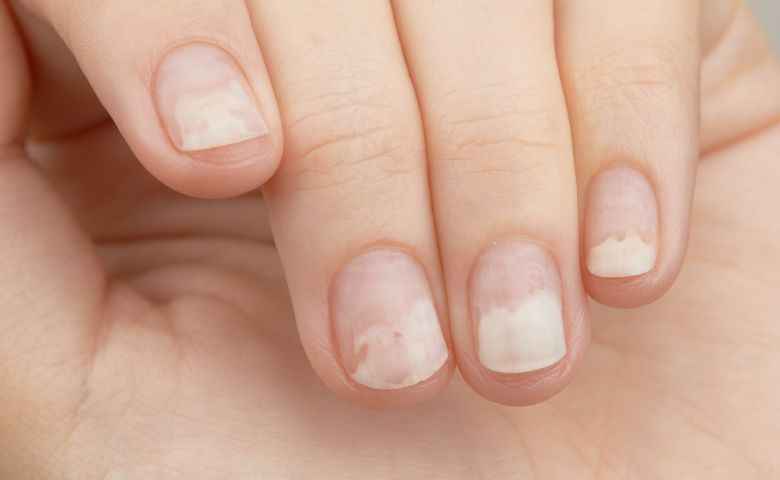
Onycholysis describes separation of the nail plate from the nail bed. The lifted portion appears white or opaque because it is no longer attached to the tissue beneath.
Causes include repeated manipulation of the nail, aggressive cleaning underneath the nail, soaking during manicures and pedicures, trauma from footwear or running, psoriasis and fungal infection.
Identifying the cause determines the treatment. Where the trigger is mechanical, the priority is protecting the nail and allowing it to reattach as it grows. Where psoriasis or infection is responsible, that condition needs treating directly.
Paronychia
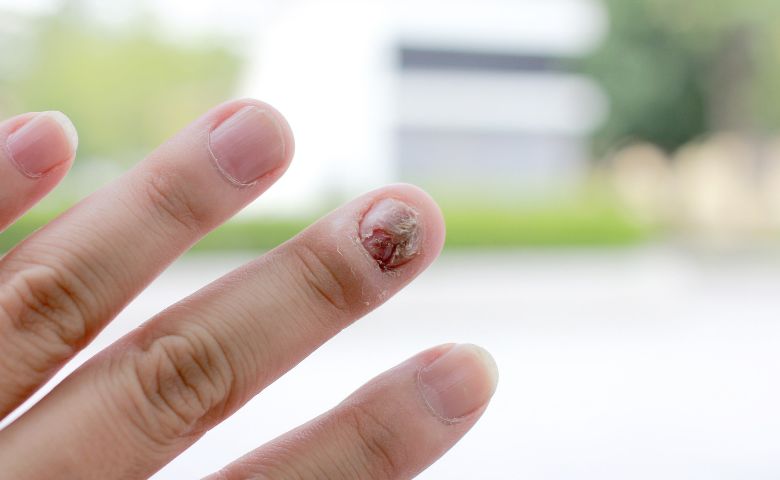
Paronychia is inflammation of the skin alongside the nail. It presents with redness, swelling and tenderness around the nail fold, sometimes with discharge.
Acute paronychia usually follows damage to the skin barrier, often from nail biting, cuticle damage or minor injury, and responds to antibiotic treatment where infection is present.
Chronic paronychia is more persistent and typically affects people whose hands are frequently wet. Multiple organisms are usually involved. Left untreated it can distort the nail and cause lasting changes, so early management matters.
Bacterial And Yeast Nail Infection
Pseudomonas infection produces a characteristic green or black discolouration of the nail, most often where the nail has already lifted and moisture has become trapped underneath.
Candida can affect the nail plate and surrounding skin, causing discolouration and lifting, and is commonly seen alongside chronic paronychia. Treatment may require oral antifungal medication.
Brittle, Splitting And Discoloured Nails
Brittle and splitting nails are among the most common nail complaints. Contributing factors include frequent hand washing, detergent exposure, repeated use and removal of nail polish, minor recurring trauma and the natural changes that come with age.
Management focuses on reducing the causes: protecting the hands during wet work, moisturising the nails and cuticles, and avoiding damage to the cuticle. Where nails are unusually brittle or changing shape, blood tests may be appropriate to check for iron deficiency or thyroid disease.
Discolouration has a broad range of causes, from nail polish and smoking through to infection, medication and injury to the nail bed. Persistent or unexplained discolouration should be assessed rather than covered.
Nail Changes That Need Urgent Assessment
Some nail changes require prompt review.
Longitudinal melanonychia refers to a brown or black band running from the base of the nail to the tip. In most cases it is benign, and it is more commonly seen in people with darker skin tones, where pigment cells around the nail matrix deposit pigment as the nail grows.
Melanoma can also develop within the nail unit. Features that raise concern include a band that is uneven in width or colour, asymmetry within the band, a band that is widening or changing, and pigmentation extending onto the skin at the base of the nail.
If you have a pigmented band on your nail that is new, changing, widening, or extending onto the surrounding skin, arrange assessment promptly. Nail melanoma is uncommon, but early diagnosis significantly affects outcomes.
Nail tumours and cysts are rare and may present as a split in the nail, a lump beneath the nail, or a lump that discharges fluid. These also require assessment and, in most cases, referral for surgical management.
Why See A Nail Dermatologist Online?
Nail conditions are commonly misdiagnosed. Fungal infection, psoriasis and mechanical damage can look alike, and treating the wrong cause wastes months given how slowly nails grow.
Seeing a nail dermatologist online gives you access to specialist assessment without lengthy waiting periods, regardless of where you are located.
Digital Dermatology can help with:
- confirming the diagnosis and distinguishing between conditions that look similar
- arranging nail clippings for fungal culture where infection is suspected
- prescribing oral and topical treatments
- treating underlying skin conditions such as psoriasis and eczema
- assessing pigmented nail changes and directing you to urgent care where needed
- advising on nail care to prevent recurrence
- providing ongoing review as the nail grows out
Nail conditions are well suited to online assessment because diagnosis relies largely on clinical history and visual examination of the nail.
Nail Disorder Treatment
Treatment depends entirely on the underlying cause, which is why accurate diagnosis comes first.
Diagnostic Testing
Nail clippings and scrapings can be sent for microscopy and fungal culture to confirm whether infection is present. This step prevents months of unnecessary antifungal treatment where the cause is something else. Blood tests may be arranged where a systemic cause is suspected.
Oral Antifungal Treatment
Where fungal infection is confirmed, oral antifungal tablets such as terbinafine or itraconazole are the effective treatment. Courses generally run for three to six months, and the nail continues to improve after treatment finishes as it grows out.
Topical Therapy
Topical treatments have a role in early or superficial infection, in maintenance, and alongside other therapies. They are less effective when the nail plate is heavily involved.
Treating The Underlying Skin Condition
Where nail changes are driven by psoriasis, eczema or lichen planus, treating that condition is what improves the nails. This may involve topical treatments or systemic therapy depending on how extensive the skin involvement is.
Nail Care And Prevention
Practical measures reduce recurrence and support recovery: wearing gloves for wet work, moisturising the nails and cuticles, avoiding cuticle damage, keeping nails trimmed short, choosing well-fitting footwear, and ensuring salon instruments are properly sterilised.
Conditions We Assess And Refer On
Some nail conditions require hands-on procedural care that cannot be delivered remotely. These include ingrown toenails, severely thickened toenails requiring mechanical reduction, and nail tumours or cysts needing surgical removal.
Assessment still has value. A dermatologist can confirm what the problem is, rule out conditions that look similar, and direct you to the right practitioner rather than leaving you to work it out yourself.
What To Expect From An Online Dermatology Consultation
An online consultation is designed to reach a clear diagnosis and treatment plan.
You will typically provide:
- photographs of the affected nails, including close-ups
- details of when the changes started and how they have progressed
- whether one nail or several are affected
- any treatments already tried
- relevant medical history, including skin conditions and joint symptoms
Your dermatologist will provide:
- confirmation of the diagnosis
- arrangements for nail clippings or blood tests where required
- prescriptions where appropriate
- a treatment plan with realistic timeframes
- referral where in-person or procedural care is needed
Why Early Assessment Matters
Nail conditions rarely resolve on their own, and delay carries a cost.
Fungal infection spreads to other nails and to the surrounding skin, and becomes harder to clear the longer it is left. Untreated nail psoriasis can cause permanent changes to the nail plate. Chronic paronychia can distort the nail over time. Pigmented changes that turn out to be melanoma are far more treatable when caught early.
Nails also grow slowly, which means every month spent on the wrong treatment is a month added to the overall timeline. Getting the diagnosis right at the outset is the single most useful thing you can do.
Book A Nail Dermatologist Online
If you have nail changes that are persisting, spreading, painful, or simply not responding to what you have tried, specialist assessment is worthwhile.
Book an online consultation with Digital Dermatology to get an accurate diagnosis, understand what is causing the change, and start on a treatment plan suited to your condition. Our pricing is transparent, so you know what to expect before you book.
FAQs
What causes nail problems?
Nail problems are most commonly caused by fungal infection, inflammatory skin conditions such as psoriasis and eczema, trauma, and repeated exposure to water and detergents. Ageing and systemic conditions including thyroid disease and iron deficiency can also change the appearance and strength of the nails.
Can a dermatologist treat nail problems online?
Yes, most nail conditions can be assessed and managed through an online consultation. A dermatologist can confirm the diagnosis from photographs and history, arrange nail clippings for testing, prescribe oral and topical treatment, and manage any underlying skin condition. Conditions requiring procedural care are assessed and referred to the appropriate practitioner.
How is a fungal nail infection diagnosed?
A fungal nail infection is confirmed by taking nail clippings from the affected area and sending them for microscopy and fungal culture. Testing matters because psoriasis, trauma and other conditions can look almost identical, and antifungal treatment will not help if fungus is not the cause.
What does nail psoriasis look like?
Nail psoriasis typically causes small pits across the nail surface, lifting of the nail from the nail bed, thickening, crumbling and yellow or reddish discolouration. Several nails are usually affected, and there may be psoriasis on the skin or joint symptoms alongside it.
Is nail psoriasis the same as a fungal nail infection?
No, they are different conditions that can look very similar. Both cause thickening, lifting and discolouration, but nail psoriasis is driven by immune-mediated inflammation while fungal infection is caused by an organism. Nail clippings sent for culture are used to tell them apart, and treating one as if it were the other will not work.
Why is my nail lifting from the nail bed?
Nail lifting, known as onycholysis, has several possible causes including trauma, repeated manipulation or soaking of the nail, psoriasis and fungal infection. The lifted section appears white because it is no longer attached to the tissue beneath. Identifying the cause determines the treatment.
What does a dark line on my nail mean?
A brown or black band running the length of the nail is usually benign, particularly in people with darker skin tones. Features that warrant prompt assessment include a band that is widening or changing, uneven in colour or width, or extending onto the skin at the base of the nail, as these can indicate melanoma of the nail unit.
When should I see a dermatologist about my nails?
See a dermatologist if nail changes are persisting or spreading, if the nail is painful or the surrounding skin is inflamed, if there is a new or changing pigmented band, or if over-the-counter treatments have not worked. Early assessment avoids months spent treating the wrong condition.