

Basal Cell Carcinoma
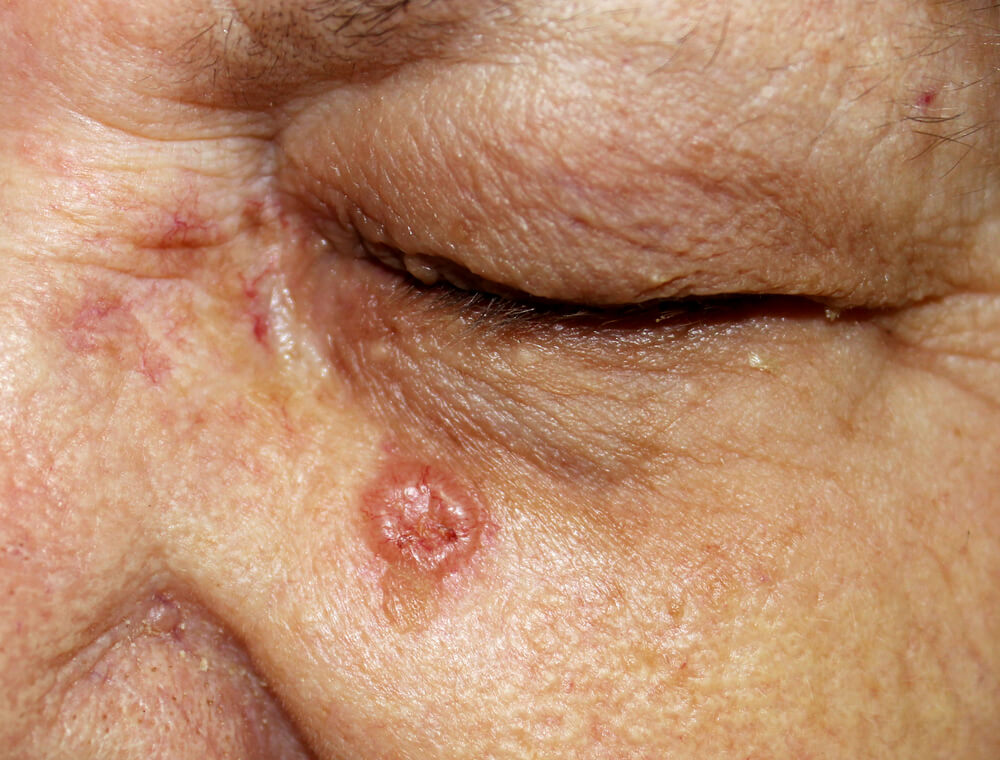
What is basal cell carcinoma?
Basal cell carcinoma is the most common type of skin cancer. It develops in the basal layer of the epidermis, which is the lower part of the outer layer of skin.
It typically grows slowly and does not spread to distant parts of the body. Even so, it does not go away on its own and will continue to enlarge over time if left untreated. Early recognition and appropriate medical assessment are important to minimise both skin damage and the complexity of treatment.
What does basal cell carcinoma look like?
Basal cell carcinoma can appear in different ways depending on the type. Common features include:
- a shiny or “pearly” bump on the skin
- a pink, red, or scaly patch
- a sore that bleeds, crusts, or does not heal
- a spot that slowly increases in size over months
- a white, firm, scar-like area
Some lesions may seem minor at first and change gradually. A key feature is that they continue to grow rather than settling or resolving.
Basal cell carcinoma is commonly found on sun-exposed areas, particularly the face, including the nose, cheeks, forehead, and around the eyes. It can also occur on the ears, chest, back, arms, and legs.
Types of BCC Cancers
There are several types of basal cell carcinoma, and their appearance can vary.
Nodular basal cell carcinoma often presents as a shiny, rounded bump. Small blood vessels may be visible on the surface, and the centre can break down to form a sore.
Superficial basal cell carcinoma tends to be flatter and may appear red, scaly, and patchy. It can be mistaken for eczema or a persistent rash.
Morphoeic basal cell carcinoma is less common and can look pale, firm, and scar-like. It may be more difficult to define and can require careful assessment and treatment planning.
Who is at risk?
Basal cell carcinoma is more common in people with higher levels of cumulative sun exposure. It is particularly frequent in Australia due to high UV exposure.
Risk factors include:
- fair skin that burns easily
- long-term sun exposure
- outdoor work or recreation
- increasing age
- a history of previous skin cancers
- a family history of skin cancer
Some people develop multiple basal cell carcinomas over time, particularly if they have had them before.
What causes basal cell carcinoma?
The primary cause is ultraviolet radiation from the sun. Over many years, repeated UV exposure damages skin cells and can lead to the development of skin cancer.
This is why basal cell carcinoma is most often found on areas of the body that receive regular sun exposure, especially the face.
Why early assessment matters
Although basal cell carcinoma usually grows slowly, it continues to enlarge over time. If left untreated, it can extend deeper into the skin and surrounding tissue.
Early assessment can:
- reduce the size of the lesion before treatment
- simplify treatment and recovery
- improve cosmetic outcomes, especially on the face
- prevent ongoing bleeding, crusting, or irritation
When should you seek medical care?
It is important to have a skin lesion assessed if you notice:
- a spot that continues to grow over months
- a sore that does not heal
- recurrent bleeding or scabbing
- a pearly or shiny bump
- a red or scaly patch that persists
- a lesion that changes in appearance over time
These features do not always mean skin cancer, but they should be checked by a medical professional.
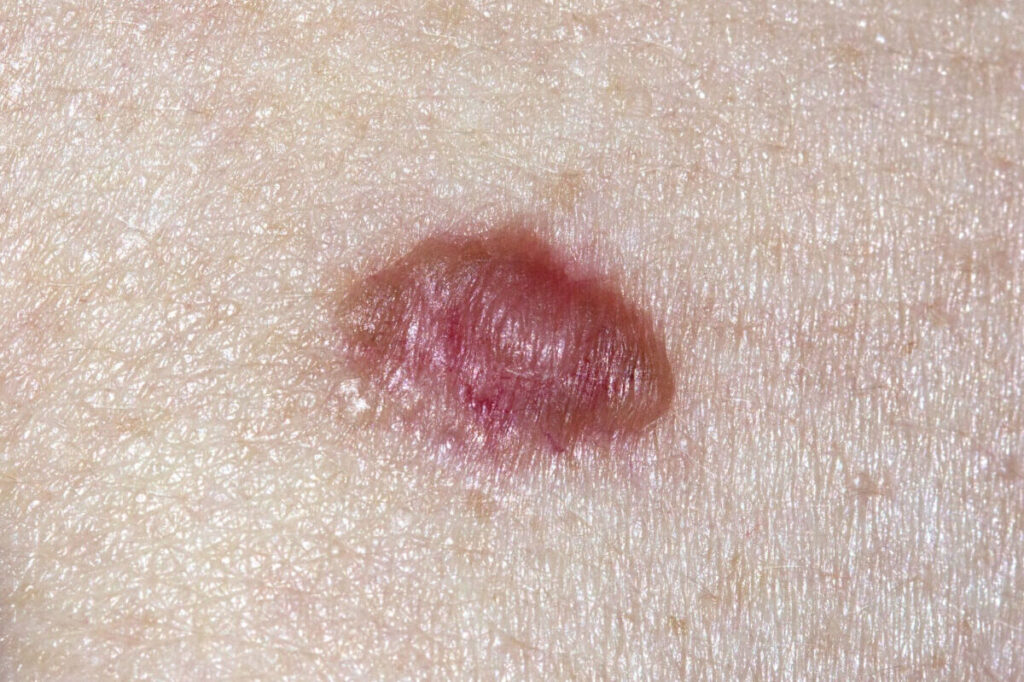
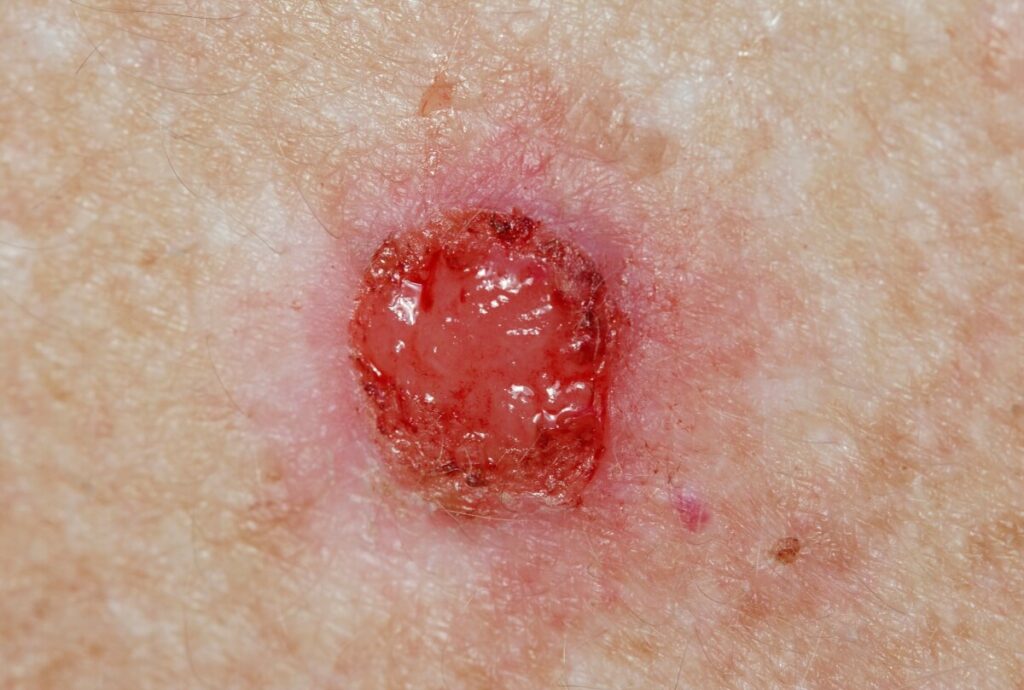
How is basal cell carcinoma diagnosed?
Basal cell carcinoma cannot be reliably diagnosed from photos alone.
While images can be useful for tracking changes over time, they are not enough to confirm a diagnosis. Many benign skin lesions can look similar to skin cancers, particularly in early stages.
An accurate diagnosis usually requires an in-person examination by a doctor. In many cases, a biopsy or removal is needed so the tissue can be assessed under a microscope.
This is especially important in Australia, where skin cancer is common and early lesions can sometimes be subtle or difficult to distinguish from non-cancerous skin changes.
How is basal cell carcinoma treated?
Treatment depends on the type, size, location, and depth of the lesion.
Common treatment options include:
- surgical excision
- Mohs surgery in selected cases
- topical treatments such as imiquimod cream for some superficial lesions
- photodynamic therapy for certain superficial lesions
- radiotherapy in specific situations
Surgical removal is often the main treatment, particularly for lesions that are deeper or located in higher risk areas such as the face.
A dermatologist or appropriate specialist will determine the most suitable approach after assessing the lesion.
Basal cell carcinoma on the face
Basal cell carcinoma frequently occurs on the face due to years of cumulative sun exposure. The nose is one of the most common sites.
When a lesion appears on the face, early assessment is especially important. Smaller lesions are typically easier to treat and may result in better cosmetic outcomes compared to lesions that have been present for longer.
Basal cell carcinoma stages and images
Many people look for images or staging information when trying to understand a skin lesion. While this can be useful for general awareness, images alone are not a reliable way to identify skin cancer.
Basal cell carcinoma does not behave like many internal cancers, and formal staging is not usually the most relevant consideration early on. The priority is recognising suspicious features and arranging appropriate medical assessment.
FAQs
What is basal cell carcinoma?
Basal cell carcinoma is the most common type of skin cancer. It begins in the basal layer of the epidermis and usually grows slowly over time.
Is basal cell carcinoma life-threatening?
Basal cell carcinoma is rarely life-threatening, as it almost never spreads to other parts of the body. However, it should not be ignored. It continues to grow over time and can cause significant damage to the surrounding skin and tissue if left untreated, particularly on the face. Early assessment and treatment are important.
What does nodular basal cell carcinoma look like?
It often appears as a shiny or pearly bump. Small blood vessels may be visible, and it can sometimes develop a central sore.
What are the common symptoms of basal cell carcinoma?
Common features include a persistent bump, a red or scaly patch, a sore that does not heal, bleeding, crusting, and gradual growth over time
Can basal cell carcinoma be treated without surgery?
Some superficial lesions can be treated with creams or photodynamic therapy, but many require surgical removal. A medical assessment is needed to determine the best option.
Do I need a biopsy before treatment?
In many cases, a biopsy or removal is required to confirm the diagnosis under a microscope.
Can I diagnose basal cell carcinoma using pictures online?
Images can help with general awareness, but they are not a reliable way to diagnose a lesion. A proper medical assessment is always recommended.
When should I get a spot checked?
Any lesion that grows, bleeds, crusts, does not heal, or changes over time should be assessed by a medical professional.