

Urticaria
Expert Online Treatment from Australia's Leading Urticaria Dermatologists
Urticaria, commonly known as hives, is an unpredictable and often distressing skin condition that can significantly affect daily life and sleep. With online access to experienced dermatologists, you can get a clear diagnosis and a personalised treatment plan without waiting months for an appointment.
What is Urticaria?
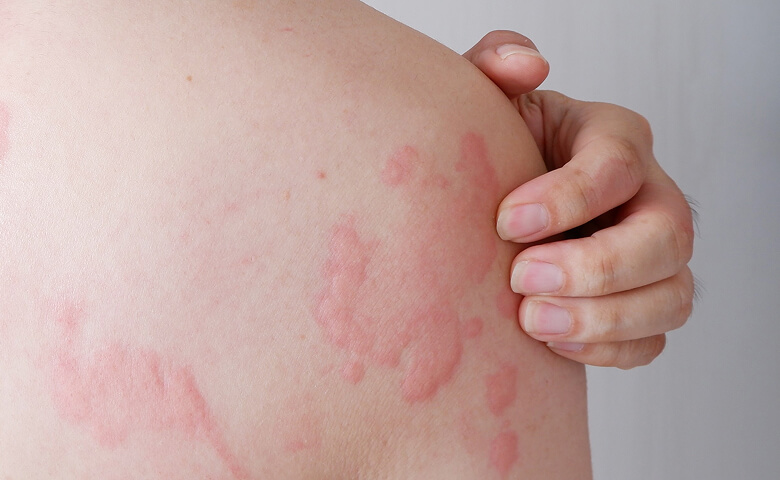
Urticaria is a skin condition that causes itchy, raised welts known as wheals to appear on the skin. These welts can appear anywhere on the body, vary in size, and typically resolve within 24 hours, although new ones may continue to form.
The welts occur when mast cells in the skin release histamine, triggering itchiness and swelling. In some cases, swelling can extend deeper into the skin and affect the face, lips, or throat. When this occurs it is called angio-oedema. While most cases are not dangerous, swelling affecting the tongue or throat requires urgent medical attention.
Urticaria can be acute, resolving within a few weeks, or chronic, persisting for months or years. Understanding which type you have is essential to getting the right treatment.
Urticaria symptoms
Urticaria symptoms can vary in severity and may come and go unpredictably. The condition can be physically uncomfortable and emotionally draining, particularly when flare ups are frequent or interfere with sleep.
Common signs include:
- itchy, raised welts on the skin that can appear anywhere on the body
- welts that may be red, pink, or skin coloured
- swelling that typically resolves within 24 hours (ie ‘transient’ but is replaced by new welts
- a burning or stinging sensation alongside itchiness
- swelling of the face, lips, hands, or feet in more severe cases
- symptoms that worsen with heat, stress, or physical triggers
Types of Urticaria
Urticaria is classified according to cause and duration. Identifying the correct type is important because the treatment approach may differ significantly between them.
Acute urticaria – <6 weeks
Acute urticaria generally resolves within six weeks. It is often triggered by a reaction to a food or medication, or by an infection such as a cold virus.
Once the trigger is identified and avoided, acute urticaria usually settles. However symptoms are likely to return if the same trigger is encountered again.
It is important to note that ordinary urticaria does not turn into anaphylaxis. Anaphylaxis is a separate and serious allergic reaction involving difficulty breathing, swelling of the lips or tongue, and a drop in blood pressure, and requires immediate emergency care.
Chronic urticaria >6 weeks
Chronic urticaria persists for more than six weeks, and often an underlying cause is not identified. It is not due to an allergy, so allergy testing is generally not helpful in this setting.
It is thought to involve an autoimmune process where the immune system continues to react against itself even after an initial trigger, such as a virus, has resolved. This leads to ongoing mast cell activation and uncontrolled histamine release in the skin, leading to the itchy welts.
In some cases it may be associated with chronic infections such as Helicobacter pylori, a bacterium found in the stomach. Treating the infection can settle the rash in some instances.
There is no immediate cure, but the condition can be managed effectively while the immune system gradually settles on its own. This usually occurs within a few months, though in some cases chronic spontaneous urticaria can persist for several years.
Chronic urticaria can be classified as ‘spontaneous’ or ‘inducible’.
Inducible urticaria occurs when welts appear in response to a specific physical stimulus. The reaction typically develops within minutes and can last anywhere from a few minutes to an hour.
Common stimuli include:
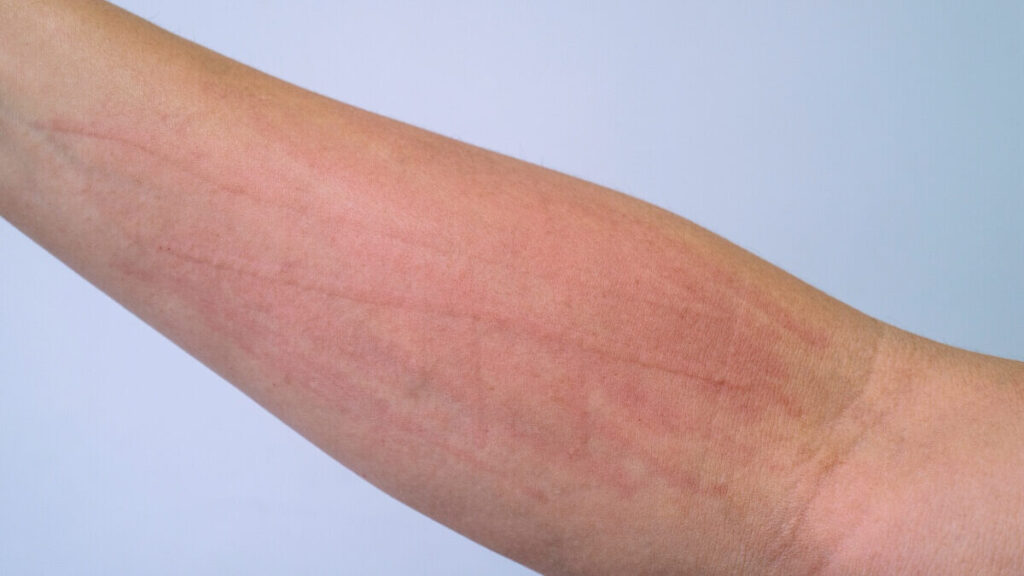
- scratching or pressure on the skin, causing welts in a line, known as dermographism
- cold or hot temperatures
- exercise or emotional stress
- contact with certain substances such as latex or specific foods
- exposure to direct sunlight
- water contact
Where possible, avoiding the specific stimulus is the most effective management strategy. When avoidance is not practical, the same treatments used for chronic spontaneous urticaria can be considered.
What causes urticaria?
The cause of urticaria depends on the type. It can affect adults and children.
What is consistent across all types is the underlying mechanism. Mast cells in the skin release histamine in an uncontrolled way, leading to the characteristic welts and itchiness.
Common urticaria triggers
Common triggers include:
- heat, including hot showers and warm environments
- stress
- certain foods such as seafood, eggs, nuts, and dairy
- medications including aspirin, ibuprofen, and some antibiotics
- alcohol
- infections including viral illnesses
- physical stimuli such as pressure, scratching, cold, or exercise
Identifying and managing personal triggers can help reduce the frequency and severity of flare ups, even when they are not the underlying cause of the condition.
How is urticaria diagnosed?
Urticaria is diagnosed through a clinical assessment of the history and typical appearance of the rash. Blood tests are not usually necessary unless a specific underlying cause is suspected. A skin biopsy is only considered if an alternative diagnosis is being explored.
Getting an accurate diagnosis is important because the type of urticaria determines the treatment approach. A dermatologist can assess your symptoms, identify the likely type, and rule out other conditions that may look similar.
Urticaria Treatments
Urticaria treatment focuses on controlling symptoms while the underlying condition resolves or is managed long term. The right approach depends on the type and severity of your urticaria.
General measures:
- avoiding excessive heat including hot showers
- identifying and avoiding known triggers where possible
- keeping a symptom diary to track flare ups and potential triggers
Antihistamines:
- non-sedating antihistamines are the first line treatment for both acute and chronic urticaria
- higher than standard doses are sometimes recommended under medical supervision
- sedating antihistamines are generally avoided where possible
Prescription medications:
- additional agents such as montelukast or low dose antidepressants with antihistamine properties can be added when standard antihistamines are insufficient
- oral corticosteroids may be used short term in acute or severe flare ups
Other treatments:
- UVB therapy can be helpful in some chronic cases
- omalizumab is an injectable therapy reserved for severe or treatment-resistant chronic urticaria and can only be prescribed by a dermatologist or allergist
A urticaria dermatologist can assess your condition and recommend a treatment plan suited to your type and severity.
Why see a urticaria dermatologist online?
Urticaria can be difficult to manage without specialist input, particularly when it is chronic or when standard antihistamines are not providing adequate relief.
Seeing a urticaria dermatologist online gives you access to expert care without long wait times, regardless of where you are in Australia.
Digital Dermatology can help with:
- confirming the diagnosis and identifying the type of urticaria
- assessing whether an underlying cause can be identified and treated
- recommending appropriate treatment based on your symptoms and severity
- prescribing medications including higher dose antihistamines and second line therapies where needed
- managing access to specialist treatments such as omalizumab where appropriate
- providing ongoing support for chronic cases
What to expect from an online dermatology consultation
An online consultation with Digital Dermatology is straightforward and designed to give you a clear path forward.
You will typically provide:
- photos of your skin during or after a flare up
- a history of your symptoms including how long they have been present and how often they occur
- details of any known triggers or patterns
- a list of medications and treatments you have already tried
Your dermatologist will assess your condition and provide:
- confirmation of diagnosis and urticaria type
- identification of any underlying causes worth investigating
- a personalised treatment plan
- prescriptions where appropriate
- guidance on long term management
This means you leave with a clear plan rather than continuing to manage symptoms without direction.
Why early treatment matters
Urticaria can have a significant impact on quality of life, particularly when it is chronic and unpredictable. Early specialist assessment helps avoid months of inadequate self-treatment and ensures the right approach is taken from the start.
Early treatment can:
- bring symptoms under control more quickly
- identify and address any underlying causes
- prevent unnecessary escalation to more aggressive treatments
- reduce the impact on sleep, work, and daily activities
For chronic urticaria in particular, getting specialist input early can make a meaningful difference to how long the condition persists and how well it is controlled.
Book a urticaria dermatologist online
If you are dealing with persistent or recurring hives that are affecting your quality of life, it is worth getting a specialist opinion.
Book an online consultation with a urticaria dermatologist through Digital Dermatology to get a clear diagnosis and a treatment plan tailored to your condition.
Our pricing is transparent, so you can access expert care without uncertainty.
FAQs
What is urticaria?
Urticaria, also known as hives, is a skin condition that causes itchy, raised welts to appear on the skin.
What causes urticaria?
The cause depends on the type. A “stimulus”, whether known or unknown triggers mast cells to release histamine, leading to swelling and itchiness.
What does urticaria look like?
It appears as raised, itchy welts that can be red, pink, or skin coloured. Individual welts typically resolve within 24 hours but may be replaced by new ones.
What is chronic urticaria?
Chronic urticaria is urticaria that persists for more than six weeks. It can be spontaneous, with no identifiable cause, or inducible, triggered by a specific physical stimulus.
What is chronic idiopathic urticaria?
Chronic idiopathic urticaria is another term for chronic spontaneous urticaria where no specific cause can be identified. It is thought to involve an autoimmune process.
How is urticaria treated?
Treatment depends on the type and severity. Non-sedating antihistamines are the first line treatment. Additional medications, UVB therapy, or injectable treatments such as omalizumab may be required for more persistent or severe cases.
Can urticaria be cured?
There is no cure, but most cases resolve over time. Chronic urticaria can persist for months or years, but with the right treatment symptoms can be well controlled in the interim.
When should I see a dermatologist for urticaria?
If your symptoms are persistent, recurring, or not responding to over the counter antihistamines, a dermatologist can confirm the diagnosis and recommend more targeted treatment.
Can children get urticaria?
Yes, urticaria is common in children, particularly acute urticaria following a viral infection. A dermatologist can recommend age-appropriate treatment options.
What is dermographism?
Dermographism is a form of chronic inducible urticaria where welts appear in response to scratching or pressure on the skin. It is one of the more common forms of inducible urticaria.