

Vitiligo
What is Vitiligo?
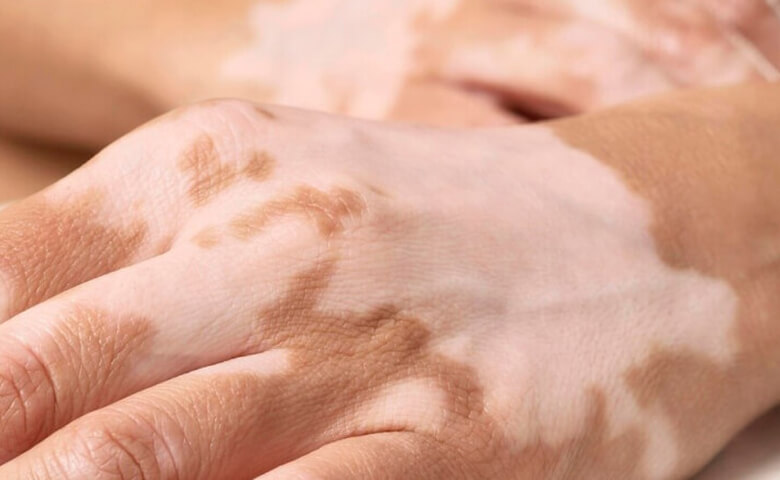
Vitiligo is a chronic condition in which patches of skin lose their pigment, resulting in clearly defined white areas on the skin. This occurs when melanocytes, the cells responsible for producing pigment, are destroyed.
Vitiligo can affect any part of the body, including the face, hands, arms, legs, torso, and genital area. Hair growing within affected areas may also lose pigment and turn white.
Although vitiligo is not physically harmful, it can have a significant impact on confidence and quality of life. Early diagnosis and treatment are important because treatment is generally more successful before extensive pigment loss has occurred.
Vitiligo symptoms
The most recognisable sign of vitiligo is the development of white patches on the skin. These patches occur because pigment-producing cells are no longer present in the affected area.
Common symptoms include:
- white patches of skin without scaling
- skin pigmentation loss that becomes more noticeable over time
- patches occurring on the face, hands, fingers, feet, torso, or genital area
- whitening of hair within affected areas
- well-defined borders between affected and unaffected skin
- usually no itch, pain, or discomfort
The appearance and extent of vitiligo varies considerably between individuals. Some people develop only a few small patches, while others experience more widespread pigment loss.
How does vitiligo start?
Vitiligo often begins as a small pale or white patch of skin that gradually becomes more noticeable over time. The earliest changes commonly occur on areas exposed to friction or trauma, such as the hands, fingers, elbows, knees, or around the eyes and mouth.
For some people, only a few small patches develop and remain stable for many years. For others, additional patches may appear over time or existing areas may gradually enlarge.
The pattern of progression is highly variable, which is why early assessment by a dermatologist is recommended.
Who gets vitiligo?
Vitiligo can affect people of any age, ethnicity, or skin type, although it is often more noticeable in people with darker skin tones due to the contrast between affected and unaffected skin.
The condition commonly begins before the age of 30, but it can develop at any stage of life.
Many people with vitiligo have no family history of the condition. However, genetic factors are thought to play a role, and autoimmune conditions such as thyroid disease may be more common in affected individuals and their families.
What causes vitiligo?
Vitiligo is generally considered to be an autoimmune condition. This means that a small part of the immune system mistakenly attacks and destroys melanocytes, the cells responsible for producing pigment in the skin.
The exact reason this occurs is not fully understood. Genetic factors are believed to contribute, although many people with vitiligo have no known family history.
Vitiligo is also associated with other autoimmune conditions, particularly thyroid disorders. Emotional stress is commonly reported as a trigger for the onset or progression of the condition, although stress alone is not considered the underlying cause.
Once melanocytes are destroyed, the affected skin loses its pigment and appears white.
How quickly does vitiligo spread?
Vitiligo progresses differently in every individual. In many cases, small patches develop initially and gradually increase in size or number over time. The condition often goes through periods of activity followed by periods of stability where little or no change occurs.
In some people, pigment loss can occur more rapidly and involve larger areas of the body within a relatively short period.
Complete loss of pigment across the entire body is uncommon.
The earlier treatment is started, the greater the opportunity to slow progression and encourage repigmentation.
Why see a vitiligo dermatologist online?
Vitiligo should be assessed and treated as early as possible. Delayed treatment can reduce the likelihood of successful repigmentation and allow additional pigment loss to occur.
Seeing a vitiligo dermatologist online gives you access to Australia’s leading dermatologists without lengthy wait times, regardless of where you live.
Digital Dermatology can help with:
- confirming the diagnosis
- assessing the extent and activity of the condition
- identifying factors that may influence progression
- recommending evidence-based treatment options
- prescribing medications where appropriate
- providing ongoing management and monitoring
Vitiligo is largely diagnosed through clinical history and visual assessment, making it well suited to telehealth consultation.
Vitiligo Treatment in Australia
Vitiligo treatment aims to stop further pigment loss, encourage repigmentation, and improve the appearance of affected areas. Outcomes are generally better when treatment begins early.
General measures
- minimise repeated friction and trauma to the skin
- avoid tight clothing or footwear that rubs against affected areas
- use gentle skincare and avoid aggressive scrubbing
- consider cosmetic camouflage products where desired
- seek psychological support if the condition is affecting confidence or wellbeing
Topical therapies
Topical treatments are often used to reduce the immune attack on melanocytes and prevent patches from enlarging.
Options may include:
- corticosteroid creams
- tacrolimus
- ruxolitinib
- other prescription anti-inflammatory therapies
These treatments are generally most effective when started soon after new patches appear.
Phototherapy
Phototherapy is one of the most important treatments for vitiligo.
Narrowband UVB therapy helps by both reducing the immune attack on pigment cells and stimulating repigmentation from dormant melanocytes within hair follicles.
Treatment is usually performed a few times per week in specialist clinics, although home-based devices may be appropriate in selected cases.
Oral medications
For rapidly spreading vitiligo, dermatologists may prescribe oral medications that suppress immune activity and help slow progression.
These treatments are generally reserved for more active cases and require specialist supervision.
Surgical treatments
Surgical treatment may be considered for stable vitiligo that has not responded to medical therapy.
Procedures are performed by specialists with expertise in vitiligo management and may include:
- cellular grafting
- punch grafting
- blister grafting
These approaches aim to transfer pigment-producing cells into affected areas.
Depigmentation therapy
For extensive vitiligo that has not responded to other treatments, depigmentation therapy may be considered.
This involves applying prescription-strength bleaching agents to remove the remaining normal skin pigment and create a more uniform skin tone.
Depigmentation therapy is permanent and is reserved for carefully selected cases.
Is vitiligo curable?
There is currently no permanent cure for vitiligo.
However, many treatments can successfully slow progression, stabilise the condition, and encourage repigmentation of affected areas.
The likelihood of successful repigmentation depends on several factors, including how early treatment begins, the location of the patches, and whether pigmented hairs remain within the affected skin.
Areas such as the face generally respond better to treatment than areas with fewer hair follicles, such as the fingertips, lips, or around the nails.
What to expect from an online dermatology consultation
An online consultation with Digital Dermatology is designed to provide a clear diagnosis and treatment plan.
You will typically provide:
- photographs of the affected areas
- information about when the condition started
- details about any progression or spreading
- previous treatments you have used
- relevant medical and family history
Your dermatologist will assess your condition and provide:
- confirmation of diagnosis
- assessment of disease activity
- treatment recommendations
- prescriptions where appropriate
- advice regarding long term management
This allows you to move forward with a clear and personalised treatment plan.
Why early treatment matters
Vitiligo should be treated as early as possible.
Too often, treatment is delayed or is not intensive enough, reducing the likelihood of successful repigmentation.
Early treatment can:
- slow or stop further pigment loss
- improve the likelihood of repigmentation
- reduce the extent of future skin involvement
- minimise long term cosmetic changes
- improve confidence and quality of life
Starting treatment early provides the best opportunity for achieving meaningful improvement.
Book a vitiligo dermatologist online
If you have noticed white patches on your skin or are experiencing ongoing pigment loss, it is worth seeking specialist advice.
Book an online consultation with a vitiligo dermatologist through Digital Dermatology to receive a diagnosis, understand your treatment options, and develop a management plan tailored to your condition.
Our pricing is transparent, so you can access expert dermatology care without uncertainty.
FAQs
What is vitiligo?
Vitiligo is a chronic condition that causes patches of skin to lose their pigment due to the destruction of melanocytes, the cells responsible for producing skin colour.
How does vitiligo start?
Vitiligo often starts as a small pale or white patch of skin that gradually becomes more noticeable over time. The earliest patches commonly appear on the hands, face, fingers, or around the eyes and mouth.
What causes vitiligo?
Vitiligo is generally considered an autoimmune condition in which the immune system mistakenly attacks pigment-producing cells in the skin. Genetic factors may also contribute to its development.
Can a dermatologist help with vitiligo?
A dermatologist can help with vitiligo by confirming the diagnosis, assessing disease activity, prescribing appropriate treatments, and developing a management plan aimed at slowing progression and encouraging repigmentation.
Is vitiligo curable?
There is currently no permanent cure for vitiligo. However, treatment can often stabilise the condition, slow further pigment loss, and restore pigment in some affected areas.
How is vitiligo treated?
Vitiligo is treated using a range of approaches including topical medications, phototherapy, oral medications, surgical procedures, and in some cases depigmentation therapy. The most appropriate treatment depends on the extent and activity of the condition.
Can white patches on the skin be something other than vitiligo?
White patches on the skin can be caused by several conditions other than vitiligo, including fungal infections, post-inflammatory pigment changes, and other pigment disorders. A dermatologist can determine the correct diagnosis and recommend appropriate treatment.