

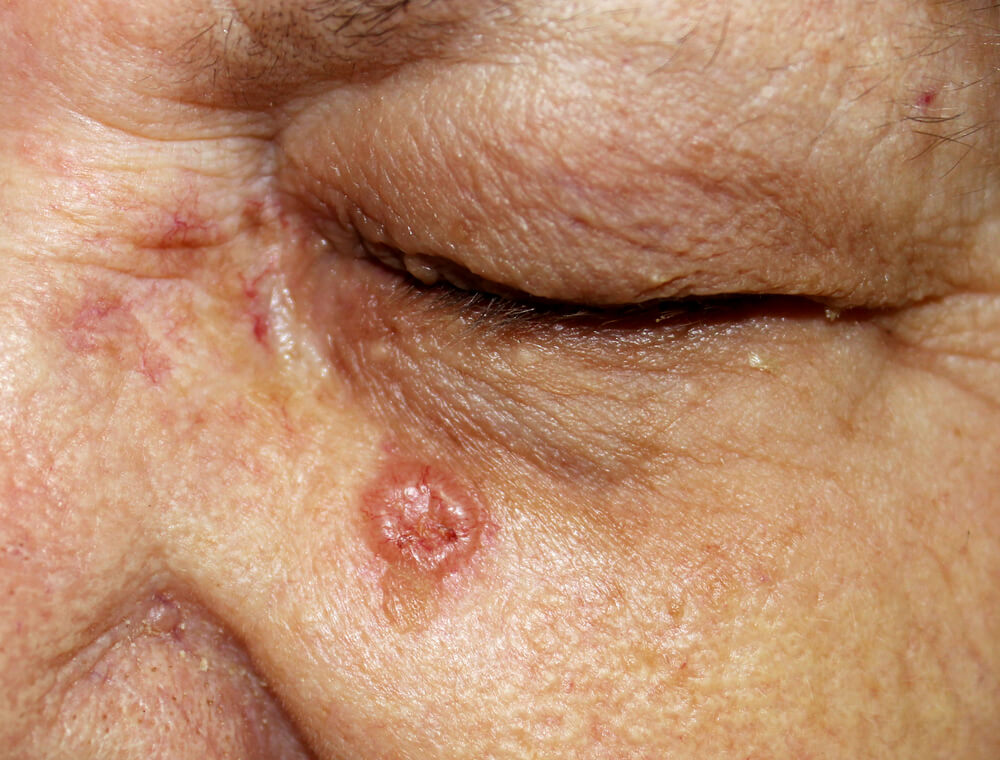
What is Basal Cell Carcinoma (BCC)?
BCC is the most common type of skin cancer. The top part of the skin, called the epidermis, is made up of about 12 very thin layers of cells. A basal cell carcinoma is a skin cancer that arises from the bottom – or basal – layer of the epidermis. It is a slow growing skin cancer that is not dangerous, as it has no ability to get into blood vessels and spread to other parts of the body.
Who may get a BCC?
BCC is common in fair-skinned people with a history of a lot of day-to-day sun exposure, for example a farmer or outdoor worker. As it is due to years of sun exposure it typically occurs in older adults. Genes play an important role; there is often a family history of this type of skin cancer.
What causes BCC?
BCC is primarily caused by UV radiation from the sun.
What are the clinical features of BCC?
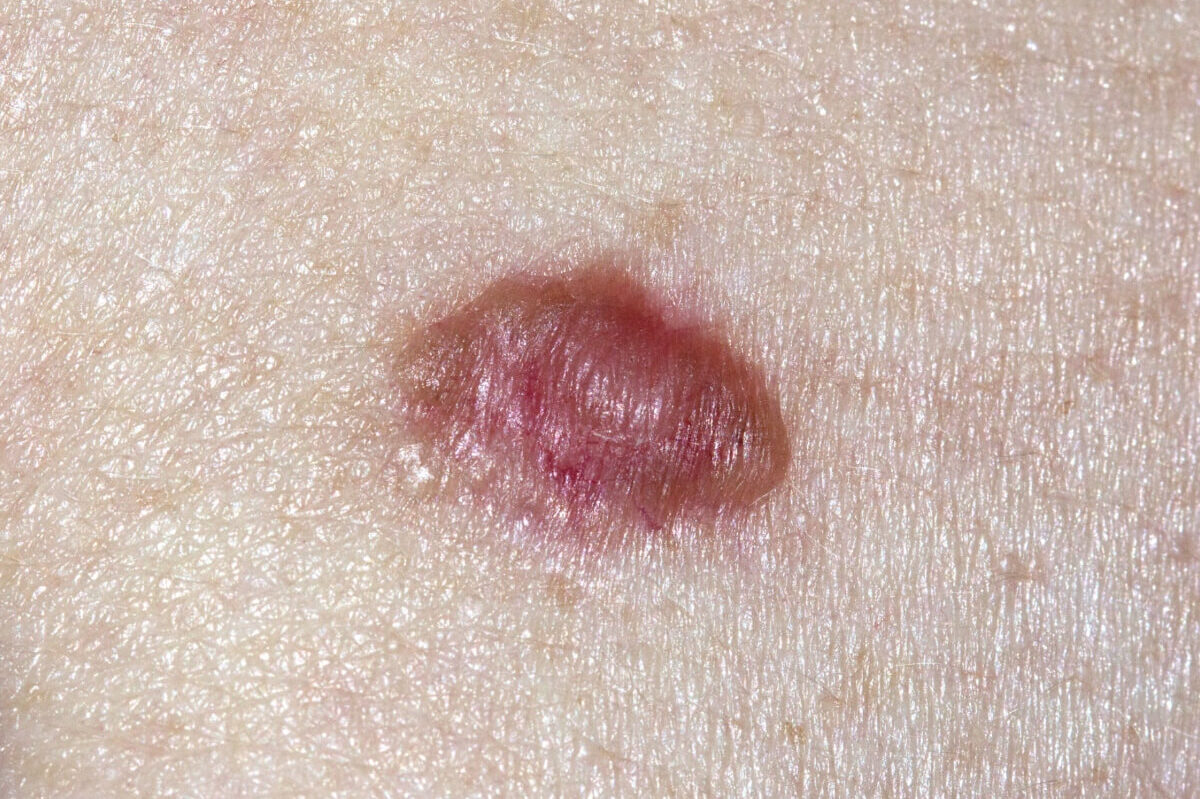
- A bump on the skin that may have a shiny or “pearly” appearance (a nodular BCC)
- Some BCCs are flat, red and scaly (a superficial BCC)
- Less commonly BCCs can be flat, white and firm – like a scar (a morphoeic BCC)
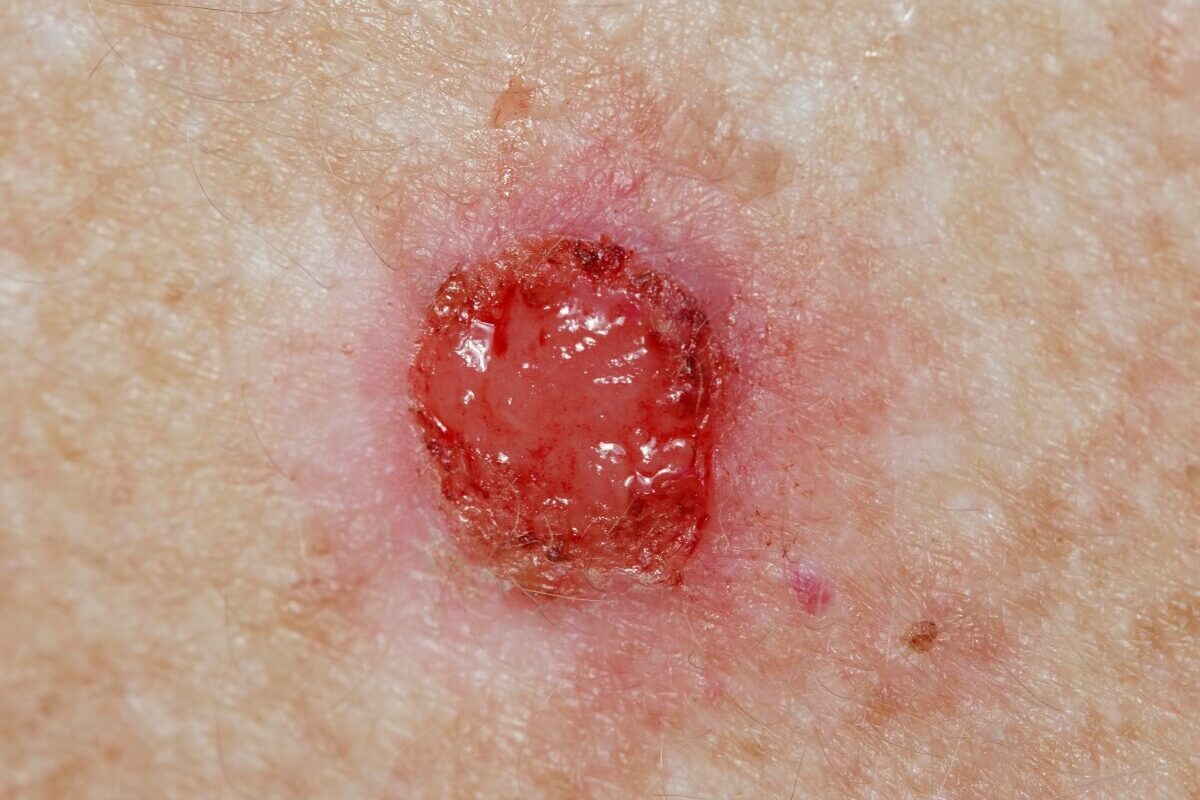
- All BCCs will continue to enlarge in size – over a period of months to years
- Eventually BCCs will bleed and scab and become sores that do not heal
On which part of the skin do BCCs occur?
- The most common site is on the face, including the nose
- Occasionally BCCs can occur in sites that don’t always receive a lot of sunlight, for example behind the ears
- Superficial BCCs often occur on the chest, back, arms or legs
How are BCCs treated?
- Surgical excision is the main treatment. This can be performed be a Dermatologist under local anaesthetic. In some cases, referral to see a Plastic Surgeon is required.
- Mohs surgery is a special operation where the skin sample is analysed while waiting in the procedure room, and the doctor returns to remove further small areas a step at a time to remove all of the skin cancer “roots”. It may be needed for some morphoeic BCCs.
- Topical therapy, especially imiquimod cream, can be suitable for the treatment of some superficial BCCs
- Photodynamic therapy can also be used for superficial BCCs. This treatment involves the application of a cream (containing a chemical known as a porphyrin), and then 1-2 hours later a red light is shone onto this area for about 10 minutes to “activate” the cream.
- Radiotherapy offers a high cure rate for BCCs. So-called “superficial” radiotherapy is safe and effective but requires multiple visits to a radiotherapy centre. After the crusted scab peels off, the cosmetic result can be very good, however 5-10 years later the irradiated skin often becomes white in colour.
What is the outcome of BCC?
BCC is highly curable. To minimise the cosmetic impact of surgery, it is preferable to detect and treat BCCs early. To do so, those who are at risk of developing skin cancers should consider having regular skin checks. Ongoing sun protection is very important.