

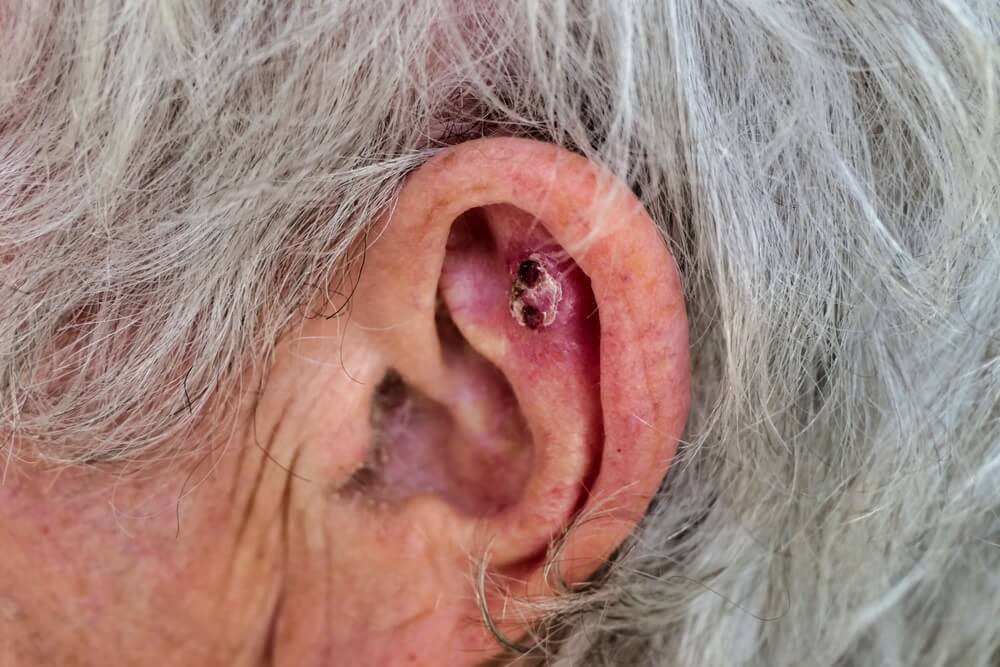
What is Squamous Cell Carcinoma (SCC)?
SCC is the second most common type of skin cancer (with BCC being the most common and melanoma the least common). SCCs arise from the epidermis in the top layer (unlike BCCs which arise from the base layer). Although most SCCs of the skin are low grade and easily curable, some can be potentially dangerous as they have a risk of entering blood vessels and spreading to other parts of the body.
Who gets SCCs?
SCCs most commonly arise in older individuals, especially those with fair skin and a history of chronic sun exposure or immunosuppression (ie. a dampened immune system)
What causes SCC?
SCC is primarily caused by long-term exposure to ultraviolet (UV) radiation. Risk factors include:
- Chronic sun exposure (eg. outdoor workers)
- Multiple solar keratoses (scaly sunspots)
- Immunosuppression (eg. organ transplant patients)
What are the clinical features of SCC?
- A bump on the skin which is usually rough and scaly
- The bump continues to enlarge in size – for example growing from nothing to a pea-sized lump over several months
- SCCs may be sore to the touch
- Some SCCs cause crusted ulcers that never heal
On which part of the skin do SCCs occur?
- SCCs occur in areas that have been exposed to a lot of day-to-day sun
- This is mainly the face, ears (mainly in men, due to shorter hairstyles), scalp (in men who have become bald), lower lip (especially in smokers), back of the hands, forearms, and lower legs
How is SCC treated?
- Surgical excision is the main treatment
- Radiation therapy for selected cases, especially on the face
- Rapidly growing SCCs should be assessed and treated urgently, especially if a person is on a medication that dampens their immune system
What is the outcome of SCC?
Most SCCs are successfully treated – in other words they can be cured. However, large SCCs (especially if greater than 2cm in diameter) have a higher risk of spreading through the blood system and becoming dangerous. Therefore those who are at risk of developing SCCs should consider having regular skin checks. Ongoing sun protection is very important.