

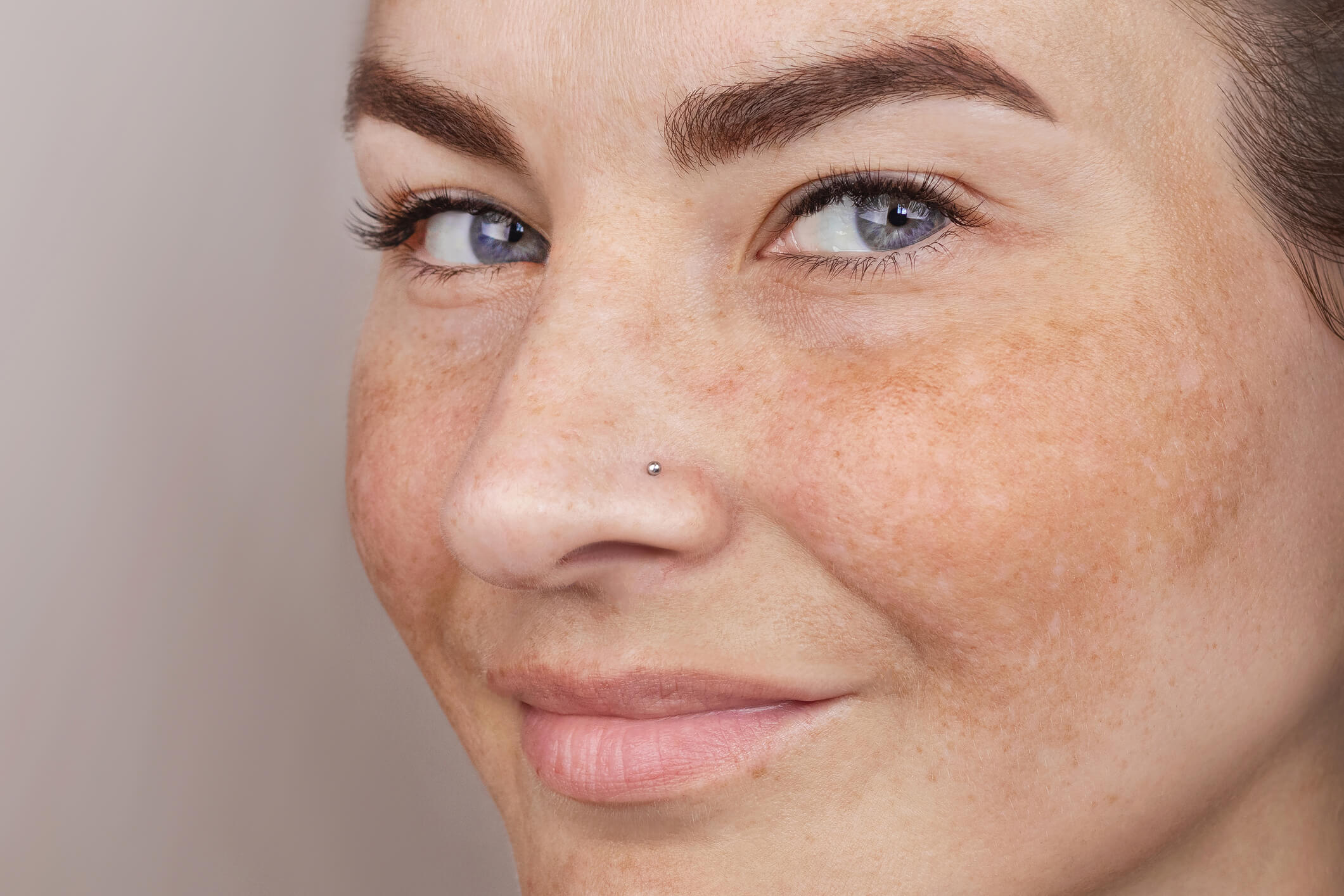
What is Melasma?
Melasma is a common skin condition that causes brown or grey-brown patches, usually on the face. It is due to overproduction of pigment (melanin) in the skin.
Who gets melasma?
Melasma is more common in women, especially during pregnancy or with hormonal contraceptive use. It is also more frequent in people with darker skin types and those with a family history of the condition.
What causes melasma?
Melasma is triggered by:
- Sun exposure (UVA, UVB and visible light)
- Hormonal changes (e.g. pregnancy, birth control pills)
- Genetic predisposition
What are the clinical features of melasma?
- Brown or grey-brown patches of darkened skin
- Typically on the cheeks, forehead, upper lip, and chin
- Usually symmetrical
- No itch or discomfort
How is melasma treated?
General Measures
- Daily broad-spectrum sunscreen use is essential
- Visible light should be blocked as well as UVA and UVB; makeup mixed with a sunscreen is an excellent way to provide this coverage
- Avoid direct sun exposure
- Use a broad brimmed hat that does not allow any visible light through
Topical Treatments
There are many topical agents that have been reported to be of benefit in treating melasma. A prescription is required for high strength hydroquinone and retinoids, and for oral tranexamic acid. Research and clinical experience supports the benefit of the following:
- Hydroquinone
- “Triple combination” (hydroquinone + retinoid + low-strength cortisone)
- Retinoids
- Azelaic acid
- Tranexamic acid (topical or oral)
- Kojic acid
- Cysteamine
- Niacinamide
- Abutin
There is a lower level of research evidence to support the benefit of licorice, mulberry, rucinol and linoleic acid.
Other Treatments
- Chemical peels (eg. glycolic acid, salicylic acid)
- these are often not effective on their own, but are sometimes used in combination with other therapies
- Laser or light-based therapies
- these are not used routinely, but can be used with caution by practitioners with experience in treating melasma
- not only may they not work, but there is a risk of worsening the pigmentation
What is the outcome of melasma?
Melasma is chronic and tends to relapse with sun exposure or hormonal triggers. It can be managed with consistent sun protection and ongoing treatment.