

What is Rosacea?
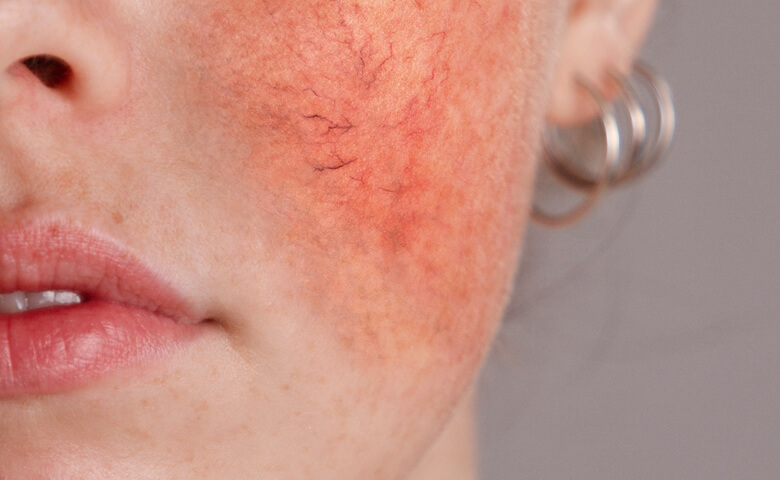
Rosacea is a common inflammatory skin condition causing redness, flushing, visible blood vessels and pimples on the face.
Other possible symptoms include eye irritation, a burning or stinging sensation, swelling and skin thickening.
Who gets rosacea?
This chronic but very treatable condition affects both men and women, and tends to become more prevalent with age.
It can affect any skintype, but tends to be most common in fair skinned people.
What causes rosacea?
The exact cause is unknown, but is felt to be a complex interplay of environmental factors, genetics, the immune, nervous, and vascular systems, and the microbiome.
We all have a microscopic mite on our skin called Demodex, which is a normal part of our skin flora, but has been found to be more abundant in the facial skin of some rosacea patients.
One or more of these factors lead to a continuum of abnormal inflammation in the skin.
Common triggers include UV exposure, heat, stress, alcohol and spicy foods.
What are the clinical features of rosacea?
Facial redness
This can include visible blood vessels (telangiectasias), particularly around the nose, cheeks and chin, but can present on any part of the face. Blood vessel changes may be finer, presenting as generalised redness and easy flushing, which may be accompanied by a sense of heat and burning.
Pimples and Bumps
These can be tender firm bumps or pus-filled pimples. Generally there are no blackheads, which helps distinguish from acne.
Eye irritation
Eyes may become bloodshot and irritated with a ‘gritty’ sensation. Crusts and scale may accumulate along the eye margin, and styes are common.
Skin thickening
The skin can become generally thicker and more ‘waxy’. Most notably, skin thickening and deformity of the nose is known as ‘rhinophyma’. Not everyone with rosacea with develop these changes.
How is rosacea treated?
General measures
Daily broad spectrum (UVA/UVB)/visible light) protection is a fundamental step in managing rosacea, as well as minimising exposure to other triggers. Mineral sunscreens are often better tolerated. Mineral-based makeup products are also usually preferred. Green-tinted foundations are best at camouflaging redness.
Keeping a symptom diary may help identify triggers.
Skincare
Generally, a simple skincare regime is best. Gentle, soothing and hydrating ingredients suitable for sensitive skin are best. Avoid harsh physical and chemical exfoliants, and be cautious with active products.
Topicals
There are numerous topicals that can be effective, particularly for the ‘inflammatory’ part of rosacea (ie pimples and bumps)
- Ivermectin (Soolantra)
- Metronidazole
- Azelaic acid
- Mandelic acid
- erythromycin
Avoid use of topical steroids as this is likely to aggravate the condition.
Oral products
Numerous oral agents can be used including:
- Antibiotics including tetracyclines (Doxycycline/Minocycline) or macrolides (erythromycin)
- Low dose isotretinoin can be very helpful in resistant cases
- Numerous other oral specialised oral agents can be used to address flushing and sensory disturbance
Laser
- The gold standard treatment of redness and visible blood vessels is vascular laser or IPL, or a combination of the two. Specific wavelengths of light are used to target blood vessels and close them down.
- Ablative lasers (+/- surgical debulking) can also be very effective for the management of rhinophyma
What is the outcome of rosacea?
Rosacea is common, and can have a big impact on confidence and quality of life. Whilst there is technically no cure, there are numerous excellent treatment options available, and maintenance is key. Speak to your dermatologist today to discuss specific options tailored to you.