


Seborrhoeic dermatitis is a common but persistent skin condition that causes redness, flaking, and greasy scale on the scalp and face. It often improves, then returns, especially during stress or colder months. Many people try dandruff shampoos or creams without lasting control.
Digital Dermatology offers online dermatologist consultations for seborrhoeic dermatitis anywhere in Australia. You upload photos and a short medical history, and a dermatologist reviews your case and provides a clear treatment plan. Prescriptions are provided when appropriate.
You can book directly through our online dermatology service with or without a referral.
What is seborrhoeic dermatitis?
Seborrhoeic dermatitis is a chronic inflammatory skin condition that affects areas rich in oil glands. These include the scalp, face, ears, and upper chest. It causes red patches with greasy or yellowish scale and may be itchy or mildly sore.
On the scalp, it often presents as dandruff. On the face, it commonly affects the eyebrows, sides of the nose, beard area, and behind the ears.
Seborrhoeic dermatitis symptoms
Symptoms vary in severity and may come and go. Common features include:
- Red patches with greasy or flaky scale
- White or yellowish dandruff on the scalp
- Itching or mild burning
- Involvement of eyebrows, eyelids, nose creases, ears, and hairline
- Flares during stress or cold weather
Seborrhoeic dermatitis on the face can be particularly frustrating as it is visible and often sensitive to skincare products.
Who gets seborrhoeic dermatitis?
Seborrhoeic dermatitis can occur at any age.
It is common in:
- Newborns and infants, and is also known as cradle cap
- Adults, particularly men
- People with oily skin
- Those with certain neurological or immune conditions
Seborrhoeic dermatitis in newborns is usually harmless and settles on its own over time, but if it is causing issues or appears to be worsening over time without any improvements then it’s still worth talking to a dermatologist.
Causes of seborrhoeic dermatitis
The exact cause is not fully understood. It is thought to involve an inflammatory response to Malassezia yeast, which normally lives on the skin.
Contributing factors include:
- Genetics
- Stress and fatigue
- Immune suppression
- Cold, dry weather
- Hormonal influences
Seborrhoeic dermatitis is not caused by poor hygiene and is not contagious.
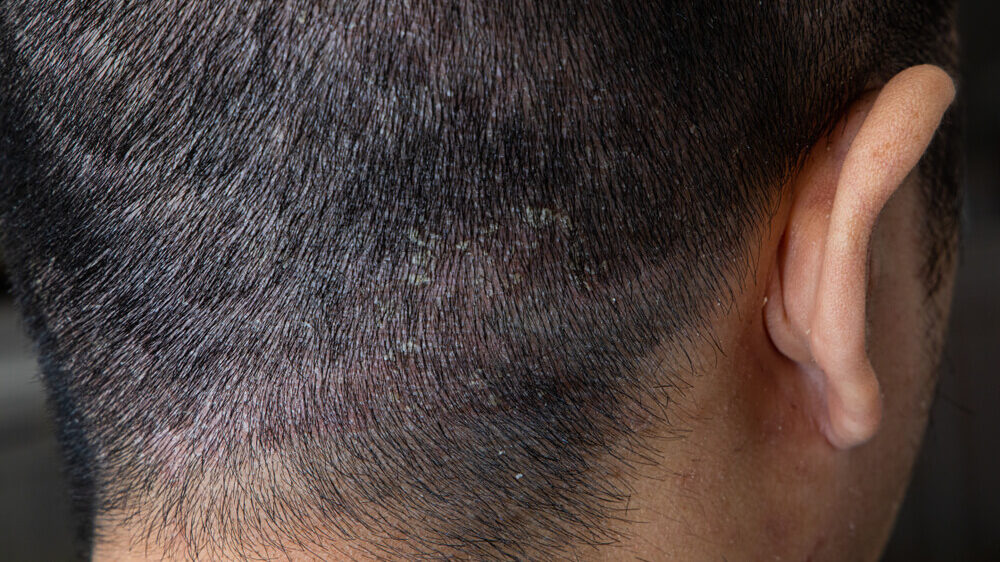
Seborrhoeic dermatitis on the scalp
Seborrhoeic dermatitis of the scalp commonly presents as dandruff or thick scale. It may extend to the hairline, behind the ears, or down the neck.
Seborrhoeic dermatitis shampoo plays a key role in control. Many people need more than one type of shampoo used in rotation to maintain results.
Seborrhoeic dermatitis in babies
Seborrhoeic dermatitis in newborns is known as cradle cap. It appears as thick, greasy scale on the scalp and sometimes the eyebrows or behind the ears.
In most cases, it does not bother the baby and improves without treatment. Gentle measures may help speed resolution.
Seborrhoeic dermatitis treatment online
Seborrhoeic dermatitis treatment focuses on controlling inflammation and yeast overgrowth, then maintaining results long term.
Your online dermatologist will tailor treatment based on age, location, and severity.
Babies
- Often no treatment is needed
- Emollient applied overnight and washed off with baby shampoo
- Gentle removal of loosened scale with a soft brush or cloth
- Occasional use of medicated shampoo only under medical guidance
Adults
General measures:
- Use gentle, non-soap cleansers
- Avoid alcohol-based or fragranced skincare
- Reduce known personal triggers
Topical treatments may include:
- Antifungal creams or lotions
- Seborrhoeic dermatitis shampoo such as ketoconazole, selenium sulfide, or zinc pyrithione
- Keratolytic products to reduce scale
- Short courses of mild topical corticosteroids
- Non-steroid anti-inflammatory creams such as pimecrolimus or tacrolimus
- Tar preparations for the scalp
Systemic treatment is occasionally required for severe or resistant cases and is prescribed by a dermatologist when appropriate.
What else could it be?
Seborrhoeic dermatitis can resemble or coexist with other skin conditions, including:
- Psoriasis, including overlap known as sebopsoriasis
- Rosacea
- Atopic or contact dermatitis
- Periorificial dermatitis
- Lupus-related facial rashes
Accurate diagnosis is important, as treatments differ.
Can seborrhoeic dermatitis be treated online?
Yes. Seborrhoeic dermatitis is well suited to online dermatology.
Clear photos allow dermatologists to assess scale, redness, and distribution. Treatment does not require procedures, and prescriptions can be arranged remotely when needed.
Online care also helps establish a long-term plan rather than repeated short fixes.
Outcome and long-term control
Seborrhoeic dermatitis is very treatable but tends to recur. Most people do best with an active treatment phase followed by a maintenance plan to reduce flare frequency and severity.
Early dermatological advice helps shorten flares and reduce reliance on steroid creams.
Fees and booking
Booking an appointment is easy to do online so you can get support and care from the comfort of your own home or easily within your day. Our consultation fees are easily available so you can get care with no unpleasant surprises.
Book an online dermatologist for seborrhoeic dermatitis today
If you are dealing with ongoing dandruff, facial flaking, or recurrent redness that keeps returning, an online dermatologist can help you regain control.
Book through our online dermatology service and receive specialist care from home.
FAQ
Dandruff is a mild form of seborrhoeic dermatitis limited to the scalp.
It often improves with treatment but may return. A maintenance plan helps keep it under control.
No. It cannot be passed to others.
Steroid creams should only be used short term and under medical guidance. Long-term control usually relies on antifungal and non-steroid treatments.