

Squamous Cell Carcinoma
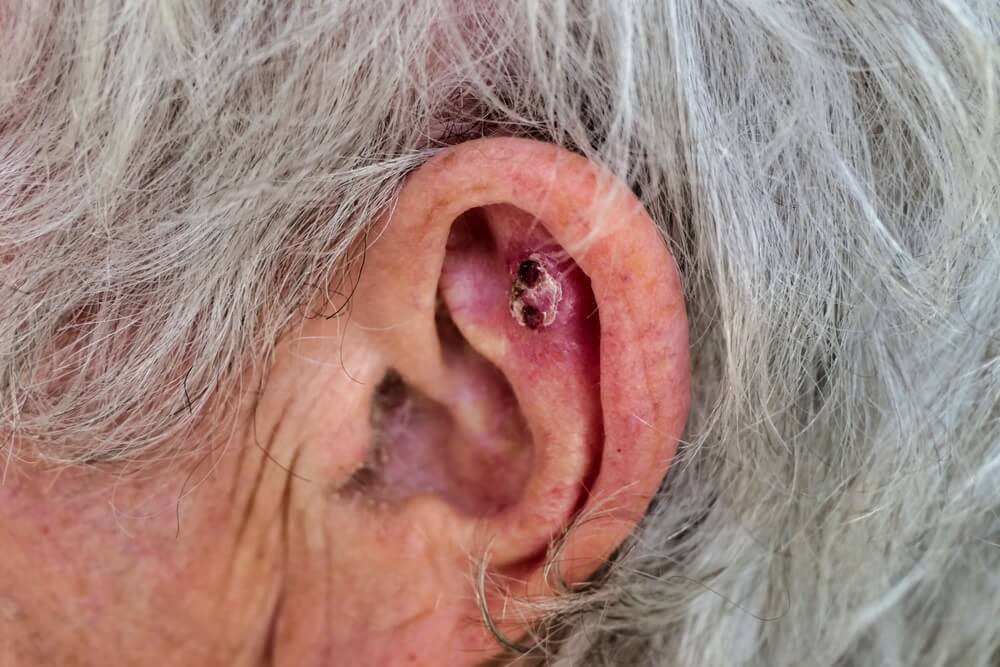
What is Squamous Cell Carcinoma (SCC)?
Squamous cell carcinoma is a common type of skin cancer that develops from the squamous cells in the outer layer of the skin.
It tends to grow more quickly than basal cell carcinoma and, in some cases, can spread to other parts of the body if left untreated. Because of this, early recognition and medical assessment are important.
What does a squamous cell carcinoma look like?
A squamous cell carcinoma can appear in several different ways, but it typically develops on areas exposed to the sun.
Common features include:
- a thickened, scaly patch of skin
- a firm, raised lump
- a sore that crusts, bleeds, or does not heal
- a bump that becomes tender or painful
- a spot that continues to grow over weeks to months
Unlike many benign (harmless) spots, squamous cell carcinomas tend to persist and gradually enlarge.
Where does a squamous cell carcinoma occur?
Squamous cell carcinomas most commonly occur on sun-exposed areas, including:
- the face, especially the lips, ears, and nose
- the scalp, particularly in people with thinning hair
- the backs of the hands and forearms
- the lower legs
It can also develop in areas not typically exposed to the sun, although this is less common.
Who is at risk of squamous cell carcinomas?
Risk increases with cumulative sun exposure over time.
Factors that increase risk include:
- fair skin that burns easily
- long-term sun exposure
- outdoor work or recreation
- increasing age
- a history of previous skin cancers
- a weakened immune system
People who have had one squamous cell carcinoma are more likely to develop others.
What causes squamous cell carcinomas?
The main cause is ultraviolet radiation from the sun. Over time, UV exposure damages skin cells and can lead to the development of skin cancer.
Chronic sun damage, often seen as rough or sun-damaged skin, increases the risk.
Why early assessment matters
Squamous cell carcinomas can grow more quickly than some other skin cancers and, in certain cases, can spread if left untreated.
Early assessment can:
- reduce the size of the lesion before treatment
- simplify treatment and recovery
- lower the risk of spread
- prevent ongoing pain, bleeding, or ulceration
When should you seek medical care?
A lesion should be assessed by a doctor if you notice:
- a scaly lump that continues to grow
- a sore that bleeds, crusts, or does not heal
- a constantly tender or painful skin lesion
- any abnormal enlarging change in a sun-exposed area
These signs do not always indicate cancer, but they should be checked promptly.
How is squamous cell carcinoma diagnosed?
Squamous cell carcinoma cannot be reliably diagnosed from photos alone.
While images may help document changes, they are not sufficient to confirm a diagnosis. Many benign skin conditions can look similar.
An accurate diagnosis requires an in-person examination. In most cases, a biopsy or removal is needed so the tissue can be examined under a microscope.
How is squamous cell carcinoma treated?
Treatment depends on the size, location, and depth of the lesion.
Treatment may include:
- surgical excision
- superficial radiotherapy
- curettage and cautery in selected cases
- topical treatments for very early lesions
Surgical removal is often the main treatment, particularly for lesions that are thicker or located in higher risk areas.
Squamous cell carcinoma and sun damage
Squamous cell carcinoma often develops in areas of long-term sun damage. The surrounding skin may appear rough, dry, or scaly.
Actinic keratoses, which are rough, sun-damaged patches, can sometimes develop into squamous cell carcinoma over time.
FAQs
What is a squamous cell carcinoma?
Squamous cell carcinoma is a type of skin cancer that develops from the squamous cells in the outer layer of the skin and is commonly linked to long-term sun exposure.
Is squamous cell carcinoma life-threatening?
Squamous cell carcinomas are usually not life-threatening when detected early. However, they can grow more quickly than some other skin cancers and may spread in certain cases if left untreated.
What are the signs and symptoms of a squamous cell carcinoma?
Common signs include a scaly patch, a firm lump, a sore that does not heal, or a lesion that bleeds, crusts, or becomes tender over time.
Where does squamous cell carcinoma usually occur?
It most often appears on sun-exposed areas such as the face, ears, scalp, hands, and lower legs.
Can a squamous cell carcinoma spread?
Yes, a squamous cell carcinoma can spread, although this is less common than with melanoma. The risk increases if the lesion is left untreated or if a person is immune suppressed.
Can a squamous cell carcinoma be diagnosed from photos?
Squamous cell carcinomas cannot be reliably diagnosed from photos alone. A proper in-person assessment is needed, often with a biopsy.
When should I get a spot checked?
Any persistent, growing, scaly, or non-healing lesion should be assessed by a medical professional as soon as possible.