

Rosacea
Expert Online Treatment from Australia’s Leading Rosacea Dermatologists
Rosacea is a common inflammatory skin condition that can be frustrating, persistent, and difficult to manage without the right support. With online access to experienced dermatologists, you can get a clear diagnosis and a personalised treatment plan without having to wait months for an appointment.
What is Rosacea?
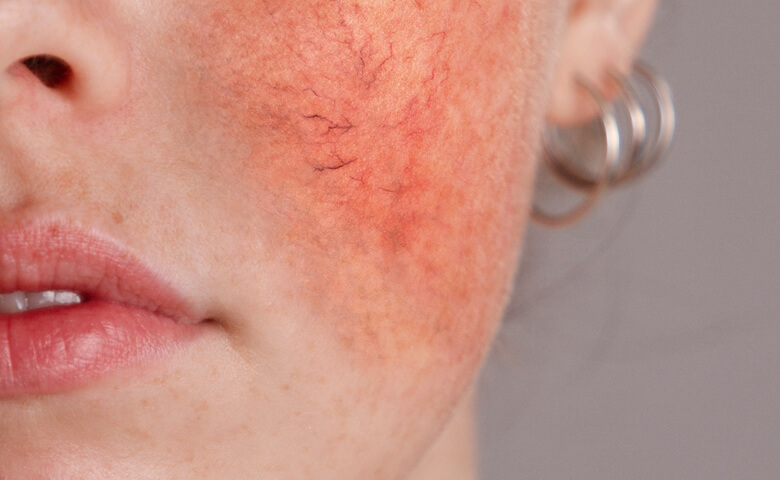
Rosacea is a chronic inflammatory skin condition that mainly affects the face. It often appears as ongoing redness, flushing, visible blood vessels, and sometimes acne like bumps.
Symptoms can come and go, but without proper treatment, rosacea can become more persistent over time. In some cases, it may also affect the eyes or lead to thickened skin.
If you are noticing recurring redness or flare ups, a rosacea dermatologist can help confirm the diagnosis and guide the right treatment early.
Rosacea symptoms
Rosacea symptoms can vary from person to person and may change over time. They often develop gradually and can become more noticeable without treatment.
Common signs include:
- persistent facial redness
- flushing that comes and goes
- visible blood vessels on the cheeks, nose, or chin
- acne like bumps or pimples without blackheads
- burning, stinging, or sensitive skin
- eye irritation, dryness, or redness
- thickened skin, particularly around the nose in more advanced cases
These symptoms can affect confidence and day to day comfort, especially when flare ups are unpredictable.
What rosacea is not
Rosacea is often misunderstood, which can delay proper treatment.
It is not acne, even though it can look similar.
It is not caused by poor hygiene.
It is not simply sensitive skin that will settle on its own.
Understanding this helps avoid ineffective treatments and instead focus on managing the underlying inflammation.
Who gets rosacea?
Rosacea can affect anyone, but it is most commonly seen in adults and tends to become more noticeable with age.
It is often more visible in fair skin, but it can occur across all skin types. Both men and women can develop rosacea, although certain forms may present differently.
Early recognition and treatment can make a meaningful difference in long term control.
What causes rosacea?
The exact cause of rosacea is not fully understood. It is thought to involve a combination of factors, including the immune system, blood vessels, environmental triggers, and the skin’s natural microbiome.
Inflammation plays a central role. In people with rosacea, the skin reacts more strongly to triggers that would not affect others, leading to redness, flushing, and irritation.
Rather than a single cause, it is usually a combination of internal sensitivity and external triggers.
Common rosacea triggers
Understanding what triggers flare ups is an important part of managing rosacea.
Common triggers include:
- sun exposure
- heat and hot environments
- alcohol
- spicy foods
- stress
- exercise that raises body temperature
- certain skincare products
Triggers vary between individuals. Identifying your own triggers can help reduce the frequency and severity of flare ups.
Why see a rosacea dermatologist online?
Rosacea is often misdiagnosed or mistaken for acne or sensitive skin, which can lead to treatments that do not work.
Seeing a rosacea dermatologist online gives you access to specialist care without long wait times, especially if you are not located near a major city.
Digital Dermatology can help with:
- confirming whether your symptoms are rosacea
- identifying your subtype and severity
- recommending targeted treatment options
- prescribing medication where appropriate
- guiding long term management to reduce flare ups
Early assessment can make a significant difference in controlling symptoms and preventing progression.
What are the clinical features of rosacea?
Facial redness
This can include visible blood vessels (telangiectasias), particularly around the nose, cheeks and chin, but can present on any part of the face. Blood vessel changes may be finer, presenting as generalised redness and easy flushing, which may be accompanied by a sense of heat and burning.
Pimples and Bumps
These can be tender firm bumps or pus-filled pimples. Generally there are no blackheads, which helps distinguish from acne.
Eye irritation
Eyes may become bloodshot and irritated with a ‘gritty’ sensation. Crusts and scale may accumulate along the eye margin, and styes are common.
Skin thickening
The skin can become generally thicker and more ‘waxy’. Most notably, skin thickening and deformity of the nose is known as ‘rhinophyma’. Not everyone with rosacea with develop these changes.
Rosacea treatments
Rosacea treatment focuses on reducing inflammation, controlling symptoms, and preventing progression. The right approach depends on your specific symptoms and severity.
General measures:
- daily sun protection using a broad spectrum sunscreen
- avoiding known triggers where possible
- using gentle, non irritating skincare
Topical treatments:
- anti inflammatory creams or gels
- medications to reduce redness and bumps
Oral treatments:
- antibiotics used for their anti inflammatory effect
- other medications for more persistent or severe cases
Procedural treatments:
- laser or light therapies to reduce redness and visible blood vessels
- specialised treatments for thickened skin in advanced cases
A rosacea dermatologist online can assess your symptoms and recommend a treatment plan that suits your condition and lifestyle.
Rosacea remedies
Many people search for rosacea remedies when trying to manage symptoms at home. While some steps can help reduce irritation, they are usually not enough on their own for ongoing control.
Helpful approaches include:
- avoiding known triggers
- using gentle skincare products
- protecting the skin from sun exposure
Without medical guidance, flare ups often continue. A structured treatment plan is usually needed to manage rosacea properly long term.
What to expect from an online dermatology consultation
An online dermatology consultation is designed to be simple and practical.
You will typically provide:
- photos of your skin
- a history of your symptoms
- details of previous treatments or products used
Your dermatologist will assess your condition and provide:
- confirmation of diagnosis
- an understanding of your subtype and severity
- a personalised treatment plan
- prescriptions if appropriate
- guidance on long term management
This allows you to move forward with a clear plan rather than trialling products without results.
Why early treatment matters
Rosacea is a long term condition, but it can be managed effectively with the right approach.
Early treatment can:
- reduce the frequency of flare ups
- minimise persistent redness
- prevent progression to more severe symptoms
- improve comfort and confidence
Getting the diagnosis right early makes a significant difference.
Why choose Digital Dermatology?
- Australian-based dermatologists
- No GP referral required
- Online consults from anywhere in Australia
- Clear diagnosis and practical treatment plans
- Prescriptions arranged when appropriate
Our online telehealth approach means you can get the care and support you need from the comfort of your home or as an easy part of your day.
Book a rosacea dermatologist online
If you are dealing with ongoing redness, flushing, or sensitive skin that is not improving, it is worth getting a specialist opinion.
Book an online consultation with a rosacea dermatologist through Digital Dermatology to get a clear diagnosis and a treatment plan that works.
Our pricing is transparent, so you can access expert care without uncertainty.
FAQs
What is rosacea?
Rosacea is a chronic inflammatory skin condition that causes facial redness, flushing, visible blood vessels, and sometimes acne like bumps.
What causes rosacea?
The exact cause is not fully known. It involves inflammation in the skin and a heightened response to triggers such as heat, sun exposure, and certain foods.
What does rosacea look like?
It often appears as persistent redness on the cheeks, nose, and chin, sometimes with visible blood vessels or small bumps that resemble acne.
Can rosacea be cured?
There is no cure, but it can be managed effectively. With the right treatment, many people achieve good control of their symptoms.
What are the best rosacea treatments?
Treatment depends on severity and type. Options include topical medications, oral treatments, and in some cases laser therapy.
How do I know if I have rosacea?
If you have ongoing redness, flushing, or sensitive skin that does not respond to typical skincare, a dermatologist can assess whether it is rosacea.
Do rosacea remedies work?
Lifestyle changes can help reduce triggers, but most people require medical treatment to properly control symptoms.
When should I see a dermatologist?
If symptoms are persistent, worsening, or affecting your confidence, it is worth getting an early assessment to confirm the diagnosis and start treatment.